| |
American Oystercatcher, Photo © Steve Nanz |
|
On Thursday, March 11, Secretary of the Interior, Ken Salazar, released the second "State of the Birds" report, which focused on the impact of climate change on birds. The report documents which habitats and species are most at risk, and suggests strategies for protecting them. The report was produced by the US Fish & Wildlife Service in partnership with Audubon, the American Bird Conservancy and other environmental groups and agencies. According to the report,nearly 90% of bird species dependent on coastal regions, like New York City, are at medium or high risk for significant declines as a result of climate change. Two high risk species that nest in New York CIty are American oystercatchers and saltmarsh sparrows.
National Audubon Society's interim president, Frank Gill, commented, "This groundbreaking report must be a rallying cry for the millions of people who care about birds and nature. It took countless citizen and professional scientists to gather the data that made the report possible and it will take even more committed people to address the peril it reveals."
For the full report, visit www.stateofthebirds.org
|
|
|
|
On February 6, New York City Audubon staff, members, and volunteers participated in Teatown Lake Reservation’s 6th Annual EagleFest. Erik Karff, Manager of Education and Outreach, and volunteer Billy Stroud staffed a table in the big tent, while others friends braved a chilling wind to see more than 30 adult and juvenile American bald eagles distributed among the different viewing areas along the Hudson River near Croton.
But as New Yorker James O’Brien points out, he didn’t need to go upstream to see these birds—he saw some right here in Harlem! "I observed my first bald eagle in Harlem in spring 2006," he says. "Ever since then I've been getting fleeting glimpses of some very high flyovers. But recently I had been getting reports out of Riverside Park of bald eagles moving up and down the River. Harlem Piers and Riverbank State Park both offer great (if chilly) vistas of the entire Lower Hudson Valley, up to and including the Tappan Zee! It was there that I found a small group of eagles finishing off a freshly-caught fish."
To see more of Jim’s photos, please take a look at his Flickr page (which includes geotags with the locations where image was taken).
|
|
|
|
According to recent studies, many bird species that winter in Central and South America are declining. One primary cause: many young birds don’t survive their first winter, and so fewer birds make the return trip to breeding grounds in North America.
To reverse these declines it is imperative that the tropical wintering habitat be restored and protected. Ecotourism has been touted as one tool, but the results are mixed. Although many ecotourism ventures have failed to yield sustainable conservation benefits, the Asa Wright Nature Center, in Trinidad’s Arima Valley, is a case study of how responsible ecotourism can benefit birds, visitors, and the local population.
Plan your trip to Asa Wright with NYC Audubon
|
|
|
|
Thousands of passengers travel through JFK Airport every day, but it’s likely few notice the patchwork of green and blue below as they jet on or off the runway: Jamaica Bay, one of New York City’s unsung treasures. Many New Yorkers may be unfamiliar with this wild oasis — yet it is the most important urban wildlife refuge in the United States, a globally significant wetland, and official Important Bird Area. NYC Audubon scientists and volunteers have been hard at work there in 2009. Beach clean-ups, horseshoe crab and shorebird monitoring, invasive plant removal, and our annual Shorebird Festival are just a few of this year’s efforts to preserve this NYC gem and educate the public about its value to our wildlife.
|
|
|
|
NYC Audubon works to protect wild birds and habitat in every borough of New York City. Click here to find out more about our conservation initiatives and achievements in the Bronx, Brooklyn, Manhattan, Queens, and Staten Island over the last year.
|
|
|
|
Become a fan of NYC Audubon on Facebook. Our Facebook page highlights up-to-the-minute efforts to protect birds and their habitat across the five boroughs with pictures, notes from program staff and volunteers, and more. Beome a fan today by visiting NYC Audubon on Facebook.
|
|
|
|
For thirty years, NYC Audubon has educated New Yorkers, studied birds in the city and advocated on behalf of the city's wild birds. NYC Audubon's volunteer advocates and scientists have been an important voice for nature in the city. Together, we have fought to preserve marshlands and nesting islands for egrets through our signature Harbor Herons program. We have sought solutions to the problem of birds colliding with windows through Project Safe Flight. We have worked to protect over 12,000 acres of habitat through the Natural Areas Initiative.
You can help us carry on our vital work! Make a special year-end contribution today.
|
|
|
|
NYC Audubon recently assumed a leading role in the proceedings at the American Ornithologists’ Union, the largest bird-related professional organization, which convened this August in Philadelphia.
For more information about our research contributions, click here.
|
|
|
Growing awareness of light’s fatal attraction to birds has led to action: NYC Audubon inaugurated Lights Out NY in 2005. This year, a number of the city’s iconic buildings—the Chrysler Building, Rockefeller Center, Citicorp, the Worldwide Plaza, and Coney Island’s Parachute Jump—will turn off their lights from midnight to dawn during peak migration season. Click here for more information on this vital program.
|
|
|
|
Volunteer Andrew Baksh (pictured above) is currently featured as a star volunteer with Together Green programs. Click here to read more!
|
|
NYC Audubon has a wide variety of opportunities for volunteers, and we've recently expanded them with support from a Together Green Volunteer Days grant. So far, we've cleaned garbage from Brighton Beach as part of the International Coastal Cleanup Day and planted trees in the forested area Mount Loretto Unique Area in Staten Island with MillionTreesNYC.
To learn more about upcoming volunteer opportunities, email us or fill out a form.
|
|
|
|
NYC Audubon is pleased to announce the launch of our new bird information hotline! If you have any inquiries about rare birds you have seen, need help identifying birds, or have a general bird question you can call 212-691-2003 or send an email to BirdID@nycaudubon.org. Photo attachments welcome!
|
|
 |
|
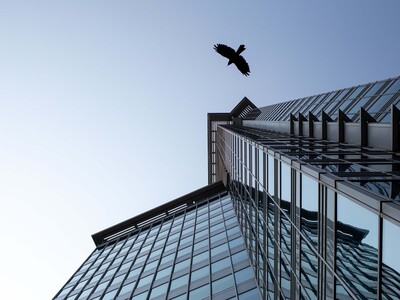
New York City Audubon has published Bird-Safe Building Guidelines, a 55-page manual for architects, landscape designers, engineers, glass technicians, developers, building managers, city, state, and federal officials, and the general public.
For a PDF copy of the Guidelines, click on the "Read More" button below. If you would like a complimentary hard copy (or up to five, to share with your colleagues), please contact us! Or if you would like more than 5 copies, you can place an order with us online here.
|
|
|